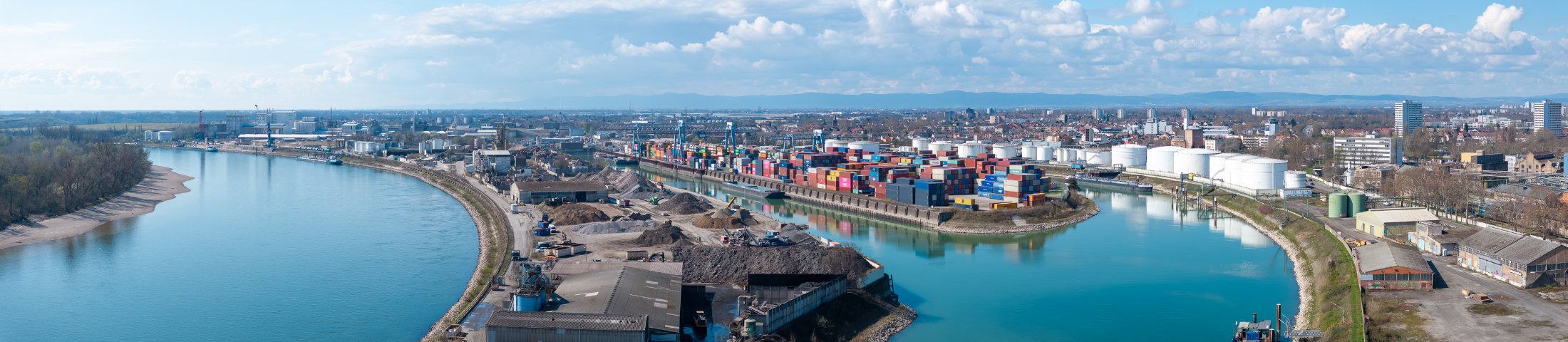
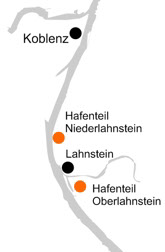
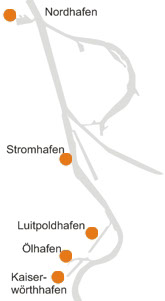
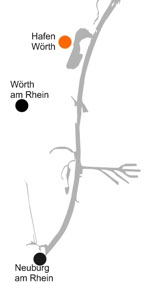
Modern logistics concepts clearly recognize the growing importance of inland waterway transport in Rhineland-Palatinate, along with the integrated network of inland ports. These systems play a key role in ensuring efficient, sustainable, and future-oriented freight transport.
Compared to road and rail, inland waterway transport is one of the most cost-efficient modes of freight transport in Europe. In the context of increasing resource scarcity and rising energy costs, the waterways along the Rhine, Moselle, and Saar are gaining continuous strategic importance for the transport of goods.
- A key location advantage for business and industry.
- High Flexibility: Integrated transport chains can be precisely adapted to individual requirements. This ensures efficient processes and minimizes potential bottlenecks.
- Cost Reduction: Inland vessels and trains enable the transportation of large volumes over long distances in a particularly economical manner, significantly reducing overall logistics costs compared to road-only transport.
- Environmental Protection: Rail and inland waterway transport produce substantially lower CO₂ emissions, as well as reduced noise and air pollution. This contributes significantly to environmentally responsible and sustainable logistics.
- Relief of Road Infrastructure: Reduced reliance on truck transport eases the burden on road networks, decreasing traffic congestion and infrastructure wear.
- Reliability: The trimodal network allows for flexible alternatives in case of disruptions, enhancing supply chain resilience and ensuring reliable delivery processes.